1.Working principle of linear stepper motors
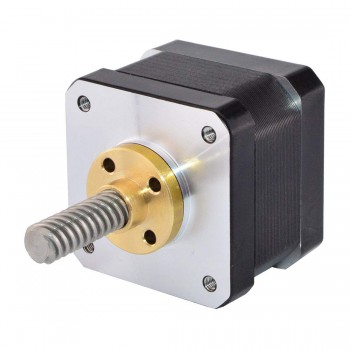
A linear stepper motor is an electromechanical device that directly converts electrical pulses into mechanical motion. By controlling the order, frequency and number of electrical pulses applied to the motor coils, the steering, speed and rotation angle of the linear stepper motor can be controlled. The working principle of a linear stepper motor is based on the control of electrical pulse signals, which drive the windings inside the motor to produce linear motion. This type of motor usually consists of a fixed stator with a coil inside and a movable slider with a permanent magnet on the slider. When current passes through the stator coil, a magnetic field is generated. The permanent magnet on the slider interacts with the magnetic field of the stator to generate an attractive or repulsive force, causing the slider to produce linear motion on the fixed axis. By controlling the direction and magnitude of the current, the position and speed of the slider can be precisely controlled to achieve precise linear displacement.
2.Methods for controlling the running direction of a linear stepper motor
1.Changing the order of the motor drive signal: The order of the stepper motor drive signal determines the direction of rotation of the motor. The direction of rotation of the motor can be changed by changing the input order of the drive signal. For example, for a bipolar stepper motor, the direction of rotation of the motor can be changed by sending the drive signal to the two opposite phases. This method requires precise control of the order and number of pulse signals, which is usually achieved through programming or a dedicated controller.
2.Use the current reversal method: The stepper motor generates a magnetic field through multiple coils, which in turn drives the rotor to rotate. By changing the direction of the current in the coil, the direction of the magnetic field can be changed, thereby changing the direction of rotation of the motor. This method requires the ability to accurately control the direction and magnitude of the current, which usually requires the use of a dedicated driver or controller to achieve.
3.Modify the logic of the control signal: The direction change can also be achieved by adjusting the direction signal of the control system or by modifying the wiring method of the motor.
3.Methods to increase the thrust of linear stepper motors
1.Increase the drive current
Increasing the drive current is one of the most common methods to increase the thrust of linear stepper motors. The output torque of a linear stepper motor can be increased by increasing the current of the driver. However, it should be noted that excessive drive current may cause the motor to overheat or damage.
2.Change the step angle
The step angle is the angle that the rotor rotates when the linear stepper motor rotates each step. Reducing the step angle can increase the thrust of the linear stepper motor because it allows the motor to exert a greater output torque. However, reducing the step angle may also reduce the motor speed.
3.Use high-precision linear stepper motors
Using high-precision linear stepper motors can also increase the thrust of the motor. High-precision linear stepper motors have higher precision and greater torque, and can exert greater output torque. However, the price of high-precision linear stepper motors is usually higher.
4.Properly adjust the load
Properly adjusting the load can greatly affect the thrust of the linear stepper motor. If the motor load is too heavy, it will cause the motor thrust to decrease. Therefore, when selecting and designing, you must consider the actual load and choose a suitable linear stepper motor.
5.Improve the heat dissipation system
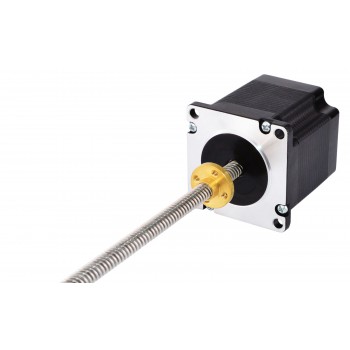
Improvement of the heat dissipation system can increase the thrust of the linear stepper motor. Overheating of the motor will affect the performance and life of the motor. Therefore, it is necessary to optimize the heat dissipation system of the motor.
4.Methods to improve the smoothness of the linear stepper motor rack
1.Adjust the pulse frequency: By adjusting the pulse frequency of the controller, the speed of the motor can be changed. Increasing the pulse frequency can increase the motor speed, while reducing the pulse frequency can reduce the speed. It should be noted that too high a pulse frequency may cause the motor to lose step and affect the control accuracy, while too low a pulse frequency may prevent the motor from working properly.
2.Adjust the current setting: The current setting affects the torque and running smoothness of the motor. Increasing the current can improve the torque and running smoothness of the motor, but too high a current may cause the motor to overheat and affect its life. Reducing the current can reduce power consumption and noise, but too low a current may cause the motor to have insufficient torque and affect the running effect.
3.Microstep control: If the stepper motor supports it, consider using microstep control. Microstepping allows the motor to have finer control between each step, thereby improving the smoothness of the rotation.
4.PID controller: The PID (proportional-integral-differential) controller is introduced to adjust the rotation of the motor. The PID controller can adjust the speed of the step according to the difference between the actual position and the desired position of the motor to achieve smoother control.
5.Optimize drive algorithm: Research and try to use more advanced drive algorithms, such as trapezoidal speed curve, to improve the smoothness and control accuracy of motor rotation.
Source:https://stepper718.muragon.com/entry/10.html |